
Die Another Day
The day I died, and why I refuse to go quietly into that good night.

I hate James Bond movies. So I’ve never actually seen Die Another Day. But, surprisingly, I love the Madonna theme song for that movie with the same title. I can relate to it far more than a normal person should.
To explain why, I have to go back twenty-five years. To the day I died.
In 2001, I was a twenty-two-year-old first-year law student. I attended the University of San Diego on a ninety percent scholarship. To keep it for all three years, I had to stay in the top ten percent of my class. Law school is notoriously brutal. And I’d staked a hundred grand in tuition on my ability to outperform several hundred other smart and competitive people.
I had a plan. I’m introverted, so I avoided speaking in class. I also rarely briefed the cases we were assigned to read. Instead, I quietly focused on distilling the black letter law into study outlines and took dozens of practice tests. And I poured hours into my legal writing class, since exams were essays.
My studying was ahead of schedule by Thanksgiving. This was fortunate because, in the three weeks leading up to our first semester’s final exams, I noticed shortness of breath and chest pain while exercising, and then while walking up the stairs in the law library. During the study week before finals, I went to three doctors: campus health, and twice to urgent care at the Navy hospital (I was a Navy wife back then). All three told me I was fine—probably just deconditioned, despite running a few miles several times per week. The campus clinician gave me a Z-pack of antibiotics.
That first semester of law school, I stayed at my parents’ house to save money because my then-husband was stationed in Washington state. (This turned out to be an issue during September 11th a few months before, but that’s another tale.)
The night before my first exam—Contracts—I couldn’t sleep because I couldn’t breathe when lying down. As dawn broke, I was gasping for air. With some effort, I got up from where I sat in the bed to find my mother (who is an early riser). I don’t know what I expected her to do, but I knew something was very wrong. I managed a few steps before collapsing. I hit the floor knees first before blacking out.
After the dark consumed me, I entered a tunnel. I floated toward a bright light. In that moment, I was not afraid. I was peaceful, calm, and fully aware that I was no longer in my body. But that didn’t seem like a big deal, because I knew my body wasn’t me.
Soon I was surrounded by the golden shimmer, and I was warm and pain-free. I couldn’t see anything, not in the way that we think of sight in our human form. I didn’t have physical senses. But I had knowledge. And that knowledge included a conversation with a nonphysical presence.
“Do you want to stay, or do you want to go?” it asked. It didn’t specify what that meant, but I understood—to stay was to stay there, in spirit, wherever that was. To go, was to return to my body.
“I just started law school,” I immediately replied. I still don’t know why that was my primary concern, but I’m only here to report what happened.
“Then sit up.”
Instantly, I was back in my body, struggling to rise to my hands and knees. Fear slammed into me like a tidal wave, followed by intense pain. Tears flowed down my cheeks, but I was too oxygen-starved to cry.
I crawled out of the bedroom. My younger brother, who was still in high school, was in the bedroom next to me. He’s not a morning person, and I will never know why he roused at that pre-dawn moment, but he opened the door to see me collapsed at his feet. He told me later he suddenly had to go to the bathroom, and hadn’t heard me moving around.
“Get mom,” I whispered. He took me seriously because, a moment later, he banged on my parents’ bedroom door. My mother took one look at me and started screaming. She told me afterwards that I was a horrible shade of blue-gray that gave her nightmares for weeks.
I vaguely recall a conversation between my parents about whether driving me to the hospital would be faster than an ambulance. I was unable to speak or move, and I was in shock. My father and brother pulled me to my feet, dragged me down the stairs, and stuffed me into my father’s car. My memory of the drive comprises snatches of panic and cold sweats.
When I got to the hospital, I was aware, but because I couldn’t speak, the ER staff thought I was confused. I was manhandled onto a wheelchair, and an oxygen mask was strapped to my face. A few minutes later, they hauled me onto a CT machine platform. They wanted me to lie on my back, but that felt like an elephant was sitting on my chest, and I refused and struggled, unable to communicate. My father was with me in the room, and he convinced me to relax while the nurse told me I would only have to lie back for thirty seconds and I could sit the rest of the time.
I don’t remember it specifically, but I had an IV placed. While they were prepping things, another nurse shoved a clipboard in front of my face with a liability waiver and a pen. “Sign here,” she said, tapping at the bottom of the page.
I tried to read the waiver before signing it. I had been studying contract law just an hour earlier! I squinted at it, trying to understand the tiny type.
My father, who is also a lawyer, said, “Don’t worry about it! Just sign it. You’re under duress.”
That sounded right, so I scrawled my signature and then laid back and held my breath.
The thirty seconds it took to scan me put me in such distress that I started vomiting. They gave me an anti-nausea medication that made me feel like bugs were crawling all over my skin. My reaction must’ve been extreme, because they sedated and intubated me.
I awoke again in the ICU, which is where I spent the next two weeks. The pulmonologist told me I had bilateral pulmonary emboli (blood clots in both my lungs originating from my pulmonary artery)—dozens of them. After I’d recovered a little, he told me I had the most severe PE he’d ever seen someone survive. He told me it was a miracle I hadn’t died.
But what he didn’t know is that I had died. I’d crossed over. And I’d chosen to come back.
Over the next week, I learned from the university that I had to take all five of my exams by the end of the three-week examination period, or I would be dis-enrolled and lose my scholarship. The pulmonologist was visibly angry with the school when we discussed discharging me for exams, declaring them cruel, and advised against it. I could barely walk or talk, still couldn’t lie down, and relied on supplemental oxygen. I also hadn’t done any studying while hospitalized because they had me on a hefty dose of Xanax to keep my heart rate controlled.
Nonetheless, at my insistence, I was discharged and took five exams over three consecutive days. I struggled physically, but my early strategy of focusing on writing skills and practice exams paid off. I got my grades a few weeks later. I’d scored in the top five percent of my class.
In January, when I returned to school, the list of the students in the top five percent was posted on the wall because we were automatically invited to Law Review. After it was posted, one of my classmates stomped over to me. I don’t remember her name anymore, but I remember what she said, her lip curled into a sneer and an accusation in her tone: “If you were supposed to be so sick, how’d you do so well?” she asked.
I hadn’t widely shared where I was during exams, but word had gotten around.
“Maybe the oxygen made me smarter,” I joked with a shrug.
If life were a Hollywood movie, that would be my Die Another Day credit roll. I would become a hero in the vein of Erin Brockovich. Everyone would leave the theater feeling like the world was just.
But alas, this was only the first of six pulmonary embolisms that I suffered over the next two decades—once in court while I was in the middle of oral argument. Then, last year, at forty-five, I had a stroke. I’ve failed multiple anti-coagulants and doctors don’t know why I clot. And, insult to injury, I’ve survived two bouts of endometrial cancer. I also have several autoimmune diseases and complex PTSD.
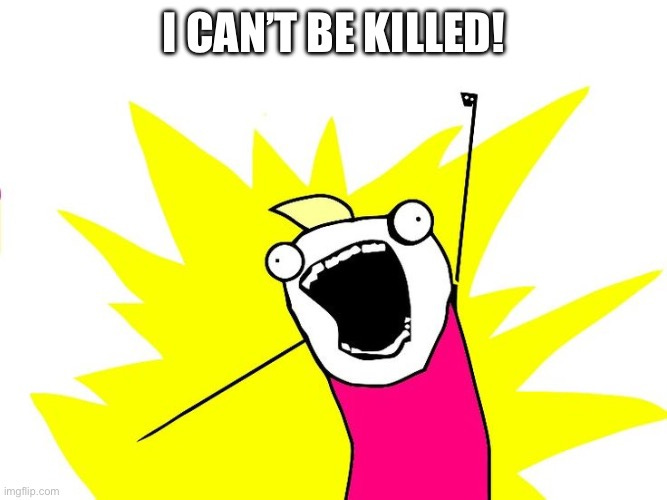
I’ve come so close to death so many times that my friends and family joke that I can’t be killed.
A life of serious chronic illness has a few downsides. First of all, it’s expensive. I frequently can’t work, and I have experienced tremendous disability discrimination in my profession. My medical bills are something to behold. Nearly every major decision I’ve made in my adult life is centered on my access to hospitals and the cost of prescriptions.
I’m also frequently exhausted and in pain. It’s depressing, and my PTSD alone is debilitating.
This past year has been especially hard. For the first time as an American, I’m afraid of our government in an existential way. Healthcare is grotesquely unaffordable, and the Medicaid safety net was eviscerated for people like me. Civil rights are being trampled. Yesterday, we invaded Venezuela.
I watch all of this and wonder: will my big mouth—because I have opinions—put my immigrant husband at risk? Will I lose the healthcare that keeps me alive? Will we be trapped here, in a failing economy, stripped of what little property and freedom we have left?
But shut my mouth, I cannot.
Despite my many struggles, I’ve devoted my life to telling the stories of the downtrodden and to fighting for the rights of the ordinary.
I spent most of last December in bed, barely able to function, largely because I haven’t been able to get necessary-to-life medication as insurance companies tighten access. I stopped writing, stopped working, and wondered what I had left to give. I felt myself fade in a way I hadn’t experienced since the first time I had cancer.
But I’m not dead yet. And apparently it’s not my time to go. After all, I went to law school.
On a core level, I’m a raging ball of stubborn foolhardiness, and I refuse to stay down where life keeps putting me. I refuse to accept my fate, or to be quiet and meek.
This morning, I’ve once again gotten up, a sneer on my lips and a glint in my eyes. I have words to say, tales to tell, wisdom to share, and ideas to spread. I have wrongs to right, and trials to suffer—maybe even conquer. I have bears to poke. At the very least, I intend to go down swearing.
I guess I’ll die another day.
Thanks for reading Posts From the Edge.
If you’d like to support the research and time that goes into my writing, you can drop a tip in my Ko-fi jar. It’s never expected, but always appreciated.
..."But shut my mouth, I cannot.'...please keep it up. Your inspirational besides being witty, wonderful and fun...yes fun..loved reading this even though don't love the health challenges. Love you.