
Twenty Years After Our Divorce, I Still Talk to My Ex-husband
But I’m no Gwyneth Paltrow

When I told one of my Latina friends that I still talk to my ex-husband, she looked at me like I claimed to enjoy colonoscopies.
“How can you be friends with your ex?” she asked, shaking her head. “That’s such white people nonsense.”
She’s not wrong, exactly. I mean, my ex and I don’t need to be friends. We don’t have kids together. We live in different states. We have separate social groups.
It’s also been twenty years since our divorce finalized. I have spent the last eighteen years happily married to my “forever husband.” Yet my ex and I never lost contact over the last two decades.
My husband and I have even had dinner a few times with my ex — voluntarily, for fun, just because we were in Philadelphia (where he lives) or he was in St. Louis (where we live).
I know it’s not normal. There’s a cultural script for what you’re supposed to do after a marriage ends. And it does not involve calling each other just to catch up, texting inside jokes, or being a shoulder for the other to cry on. You’re supposed to block each other on social media, grieve, heal, and then reappear looking radiant with your new, debonair British husband whom you met on an empowering trip to Europe, while the ex languishes in regret.
Granted, my ex did block me on social media for a bit and he calls my husband “fish and chips.” But we never fully cut ties.
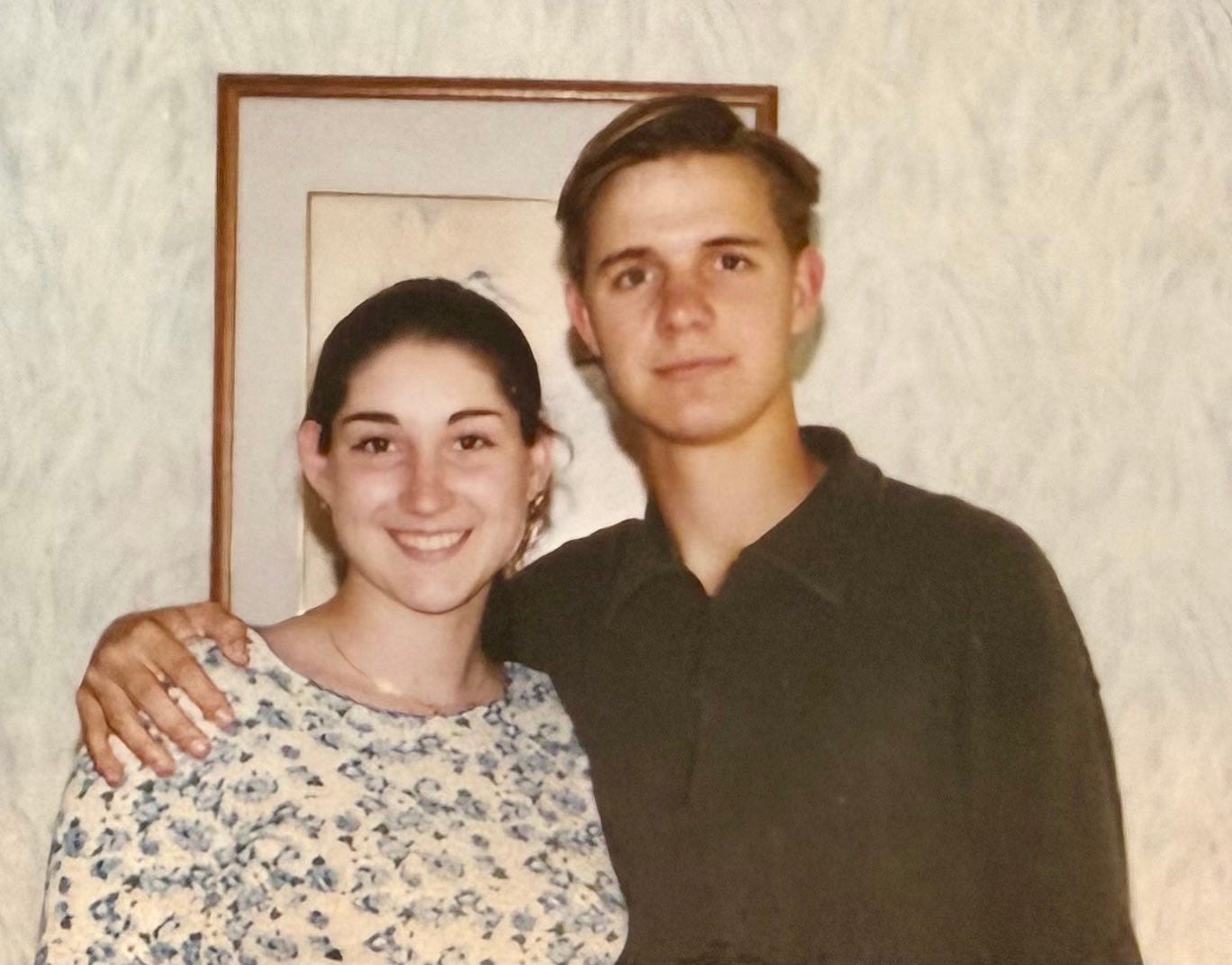
Despite everything I just said, let me be clear about something. We did not consciously uncouple. I am no Gwyneth Paltrow. Our divorce was not a gentle, mutually agreed-upon evolution. It was a violent rendering, full of acrimony and drunk dialing. The kind of divorce where our friends were allocated.
He hurt me a lot during (and after) our marriage. He was so often cruel (in words and careless behaviors, never violent) that my friends staged an intervention.
I made excuses until I couldn’t. Then I ended things. It was one of the most difficult and painful experiences I’ve ever lived through. And he blamed me.
So why do I still pick up the phone?
This will come as no surprise to anyone: we were both abused as children.
We met in high school. Neither of us were in good situations, and when he turned seventeen, he forged his mother’s signature on enlistment papers and joined the military to get away.
A year later, when I turned eighteen, he helped me flee an unsafe environment where I was repeatedly sexually assaulted. So that he could take care of me, house me, and get me medical care, he proposed. On a sunny day in May 1997, owning little more than the clothes on our backs, we eloped.
He saved me, so that’s why I still talk to him. In truth, we saved each other. And we grew up together. For a while, it was beautiful.
Then the toxic attachment styles we’d both inherited—the behaviors that felt like love because they were the only things we’d ever seen—started doing what they do. He could be mean and withholding, and I could be reactive and angry. Too much harm accumulated over a decade, until there was no recovering what started in innocence and hope and courage.
The marriage couldn’t survive. But that doesn’t mean we were nothing.

I’ve thought a lot about what it means to love someone you don’t want to be with. It’s not romantic love—not anymore—but something profound nevertheless. My love for him evolved into a love that holds space for who we are and what we’ve done, honoring the beauty and wonder of our youth and struggles, without excusing the bad parts.
It’s not forgiveness exactly, though there’s been some of that too. It’s more like, I know the whole story. And I accept it all.
My friend’s skepticism of my ongoing relationship with an ex wasn’t wrong from a self-protection standpoint. And, in fact, my oldest friends who witnessed his behaviors towards me when we were married also give me the side-eye. Divorce is like a death. A clean break is often easiest, if you can manage it. Contact risks reopening wounds, rehashing toxic behaviors, and re-litigating blame.
I’ll admit that for many years, I had to sidestep his occasional bitter remark because he blames me for the breakup. But refusing to fight with him was a decision I made consciously. Because, honestly, it just doesn’t matter. We are a part of each other’s origins stories, whether we like it or not. And it’s okay if no one else understands. It’s not for them to judge.
Sometimes love is complicated and tragic. Sometimes the most honest thing you can say about a relationship is that it was real, and it mattered, even if it didn’t work out.
I choose to let this old flame burn in embers. I don’t want to snuff it out. But it’s not because we had a mature growing apart with no hard feelings.
It’s because once, thirty years ago, we were young and scared and reached for each other and meant it, even when meaning it wasn’t enough. That’s worth something. I’m still deciding what.
Thanks for reading Posts From the Edge.
If you’d like to support the research and time that goes into my writing, you can drop a tip in my Ko-fi jar. It’s never expected, but always appreciated.